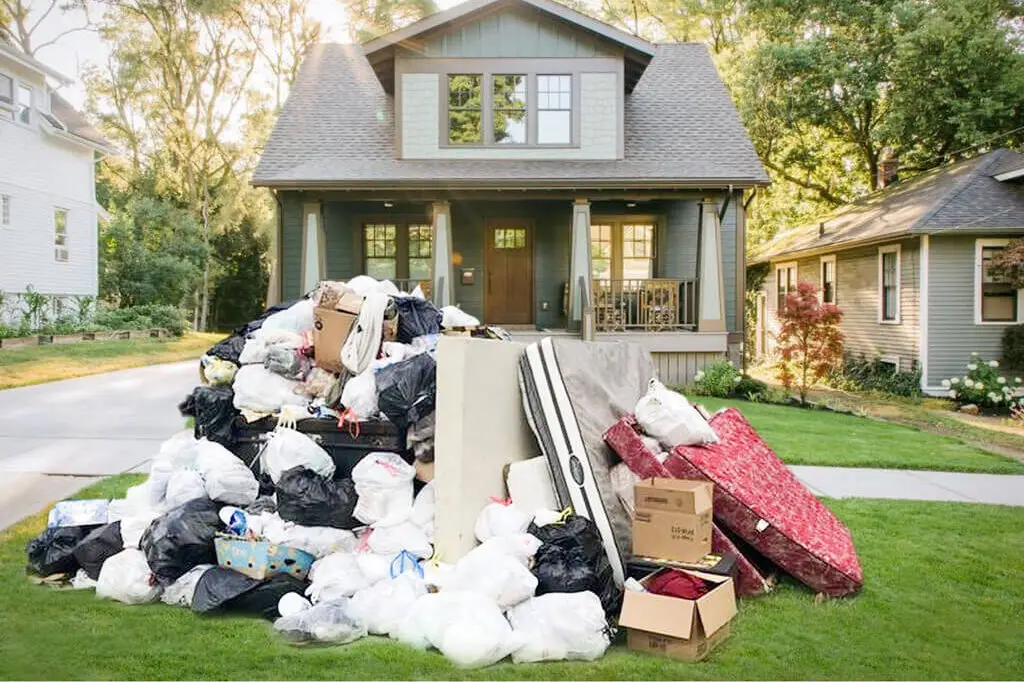
Textile waste disposal could soon change in Washington State, even if the exact timeline is still uncertain. According to EPA estimates, the average person throws away roughly 85 pounds of textiles each year, which adds up to a major environmental impact when millions of consumers do the same thing. https://www.epa.gov/facts-and-figures-about-materials-waste-and-recycling/textiles-material-specific-data Most of those textiles still end up in landfills. And if you live in King County, you already know the frustration of trying to do the right thing with old clothes and other materials.
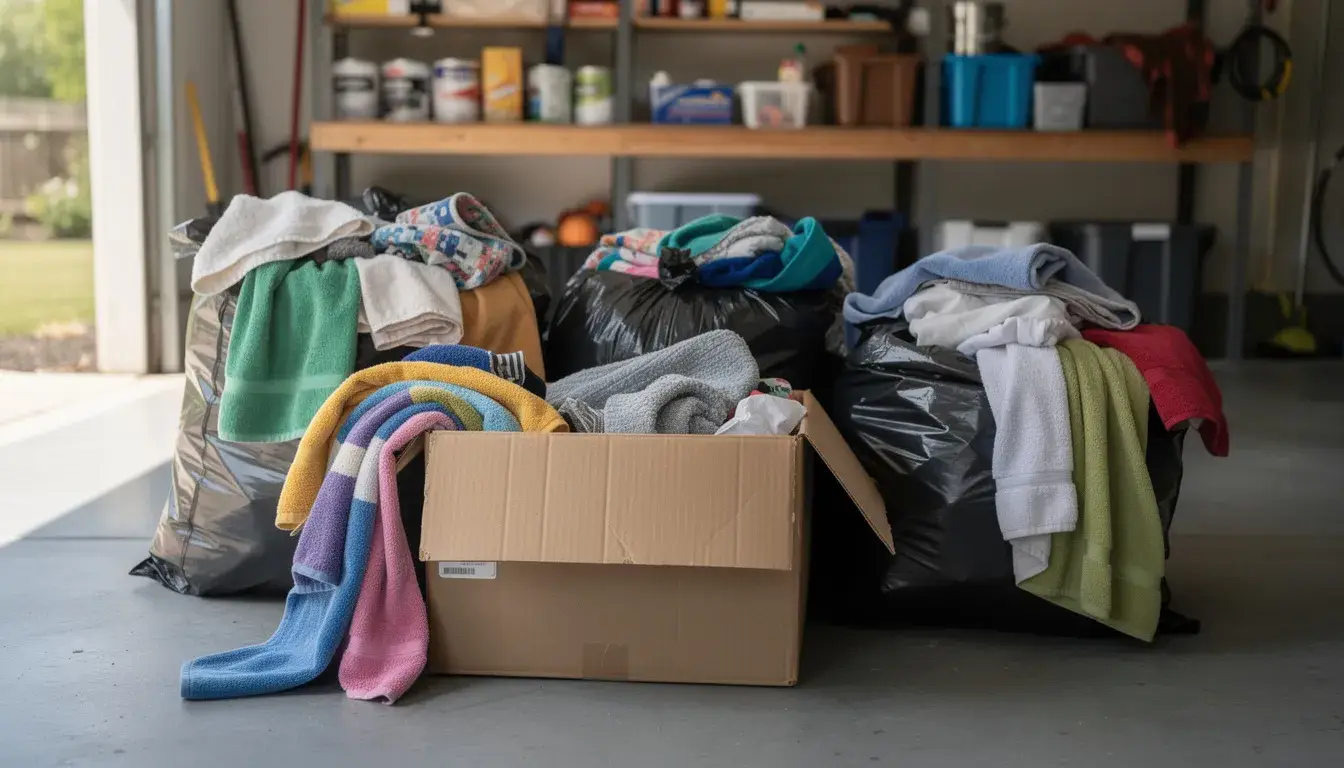
Picture this: it’s January 2026, and you just finished cleaning out three closets. You have six garbage bags of clothes, towels, and bedding sitting in your garage. Goodwill will take maybe half of it. The rest? Stained towels, worn-out bedding, mismatched socks, and stuffed animals your kids outgrew years ago.
At Supersonic Junk Removal, we handle closet cleanouts and household textile waste across the Seattle metro area. But even we see the gap between what people want from textile recycling and what the current system’s recycling services can actually process. The infrastructure for handling these materials just isn’t there yet.
That’s where HB 1420 comes in. Washington is considering an Extended Producer Responsibility bill that would shift the cost of dealing with old textiles onto the clothing companies that made them. This article covers what the bill actually says, why textile waste is growing, what you can do right now, what California is doing, and why PFAS chemicals make disposal trickier than you might think.
No legal jargon. Just practical information from someone who actually read the bill text.
What Washington’s textile EPR bill actually says about post-consumer textiles
HB 1420, paired with its Senate companion SB 6174, lays out Washington’s latest attempt at an Extended Producer Responsibility framework for apparel and textiles. HB 1420 was introduced during the 2025 legislative session and carried into 2026 with substitute versions that refined how producers would organize and fund the system.
In plain language, the bill targets post-consumer textiles. That includes clothing, bedding, towels, linens, and other textiles you buy and eventually throw away. Instead of leaving counties and cities to deal with those materials alone, it would set up a producer-funded framework for managing them statewide.
Rep. Kristine Reeves sponsored HB 1420 in the House. Sen. Liz Lovelett sponsored SB 6174 in the Senate. If you follow local politics at all, you’ve probably seen their names on environmental legislation before.
The timeline so far: HB 1420 cleared the House Environment & Energy Committee in early 2025 and moved to Appropriations. It was reintroduced at the start of the 2026 session, then amended into a “textile and apparel coordinating organization” model focused on a statewide needs assessment. As of mid-February 2026, it has not advanced out of the House Appropriations Committee, which means it is unlikely to pass this session under current legislative deadlines.
So who counts as a “producer” under this framework? Brand owners, manufacturers, importers, and major distributors selling textiles in Washington. These companies would have to join a textile and apparel coordinating organization that registers with the Department of Ecology. Think of that coordinating organization as the industry group that does the heavy lifting on planning and data.
Producers would have to appoint and join that coordinating organization by mid-2027. The organization then has to submit a statewide needs assessment to Ecology by March 1, 2028. That needs assessment is where the real design work happens: it must map out what collection sites, hauling, repair, reuse, recycling services, and safe handling would look like in practice across Washington.
It’s still a lot of moving parts, but right now those parts live on paper rather than in an active program.
The bill also does something California’s law doesn’t do in the same way. It weaves PFAS restrictions and transparency rules for the fashion industry directly into the textile conversation. Large brands with over $100 million in annual revenue would have to disclose more about environmental due diligence and working conditions in their supply chains, tying end-of-life responsibility to how products are made in the first place.
One note: everything above describes a proposal, not an adopted program. HB 1420’s current version creates the needs-assessment framework that could lead to a full textile EPR system in a future session, but timelines and details will depend on whether lawmakers revive or rework the bill.

Why textile waste and textile recycling gaps are a growing problem in Washington
The national numbers tell a clear story. In 2018, the EPA reported that 14.7% of all textile waste was recycled in the United States, amounting to 2.5 million tons. Over 11 million tons of textile waste were sent to landfills in 2018, which is nearly 8% of all municipal solid waste. Over three million tons of textiles are incinerated each year in the U.S. Put together, these numbers show that textile recycling rates are among the lowest compared to other materials, even though approximately 95 percent of textile waste can be reused or recycled. In Washington, textiles make up a notable chunk of what ends up at transfer stations.
Fast fashion is a big driver here. Zero Waste Washington’s legislative summary points out that cheap new clothing wears out quickly, increasing the volume of materials people discard. The environmental impact goes beyond landfills. Textile production uses water, energy, and chemicals. Synthetic fibers shed microplastics. Dyes pollute waterways.
Not all fibers behave the same way. Natural fibers such as cotton, organic cotton, and wool can sometimes be easier to manage at the end of a product’s life than pure synthetics, but they still require land, water, and energy to produce in the first place. Many life cycle assessments suggest that roughly two thirds of a garment’s impact comes before a consumer ever wears it, during the stages where individual fibers are spun, dyed, and finished into new textiles. That means better material choices and higher quality fabrics matter just as much as what happens at the bin.
Here’s the practical problem for homeowners: curbside recycling carts in King County and most Washington cities do not accept clothing or fabric. Loose textiles can tangle up sorting equipment at material recovery facilities. So recycling efforts for textiles require separate collection streams.
Charitable organizations like Goodwill and Salvation Army help, but they have limits. Donation centers in Seattle reject bags of stained or torn clothes. They can’t sell items that are heavily worn or damaged. Many donated clothes end up in landfills due to contamination or lack of demand. Most donated clothing is sold as secondhand apparel. Used clothing markets account for 48% of textiles sorted for reuse. Those textiles that cannot be worn or resold have nowhere to go except the garbage cart unless a recycling option is available.
Right now, only California has passed a textile EPR law. That was SB 707 in 2024. https://www.anthesisgroup.com/insights/sb-707-californias-textile-epr-law-explained/ New York introduced a similar bill, S3217A, in 2025. If HB 1420 passes, Washington would become the second state with such a law. The circular economy concept isn’t widely implemented in textiles yet, but that’s changing.
The current system was never designed for the volume of textiles Washington households are discarding today. And that volume keeps growing.
What homeowners can do with used clothing and textile waste right now
HB 1420 is still a bill. Any large-scale take-back system funded by producers won’t exist for a few years, even if it passes this session. So what can you do with your old clothes and linens today?
Start with donating wearable items. Goodwill, Salvation Army, and local Seattle thrift stores accept clean, undamaged clothing and linens. But be honest about condition. Heavily stained, ripped, or moldy textiles get rejected and sent to landfill anyway. Donated clothing that actually sells gives new life to used textiles.
King County has some textile recycling drop-off options. Some transfer stations have dedicated textile bins, and special collection events happen throughout the year. The key distinction: recycling means the fabric gets shredded and repurposed into building insulation, rags, carpet padding, or fiber fill. Reuse means someone wears it again. Both matter, but they require different collection streams.
Several national retailers offer take-back programs available right now in Washington. H&M has garment collection boxes in stores. Patagonia runs its Worn Wear trade-in program. The North Face has Clothes the Loop. And Levi’s accepts old denim for recycling in stores. These programs are free, and most accept any brand, not just their own clothing lines, turning worn pieces into recycled materials for new fibers or other recycled textiles where processing allows.
What about bulk cleanouts? During estate cleanouts, remodels, or big downsizing moves, you might have more than a few bags. Professional junk removal companies can haul large volumes, separate reusable textiles, and route them appropriately to reduce waste and support textile recycling where local options exist.
One practical tip: if textiles must go in the garbage, bag them separately. Don’t mix them loose with other materials. Loose fabric jams sorting machinery at transfer stations and contaminates other materials.

How textile EPR and recycling services work in California (and what Washington can learn)
California passed SB 707 in 2024, creating the first statewide textile EPR law in the United States. Washington lawmakers drafted HB 1420 with California’s approach in mind.
California’s basic timeline works like this: producers must join a PRO by July 1, 2026. The PRO must complete a statewide needs assessment by March 2027. And the earliest realistic rollout of new recycling services is July 1, 2028. So even in the first-mover state, this takes time.
CalRecycle is currently evaluating three PRO applicants. Landbell USA is part of Germany-based Landbell Group, which operates 42 PROs in 18 countries. Textile Renewal Alliance and Circular Textile Alliance are also in the running. California will approve a PRO by March 1, 2026.
The goals of SB 707 are clear: by around 2030, California residents should see more options for repair, take-back, and textile recycling. The state wants to divert textile waste from landfills and reduce reliance on exporting used textiles to developing countries.
Washington’s HB 1420 mirrors many of California’s structures. But Washington’s bill adds PFAS limits and supply-chain transparency reports for big fashion brands. That goes a step beyond what California requires. Fast fashion retailers would face more disclosure requirements under Washington’s version.
Washington can watch how California solves practical issues like rural access, funding collection points, and reporting. That experience could save time once Washington’s program launches.
PFAS in textiles and the fashion industry: the hidden disposal problem
Here’s something most people don’t think about when they toss an old rain jacket: it might contain “forever chemicals.”
PFAS, or per- and polyfluoroalkyl substances, are used in stain-resistant and water-repellent fabrics. Rain jackets, outdoor gear, performance apparel, even some sofa fabrics and upholstered furniture. HB 1420 directly addresses PFAS in textiles sold in Washington.
The problem is that PFAS do not break down in the environment. When PFAS-treated clothes and carpets go to landfills, these chemicals can leach into leachate and eventually groundwater. If PFAS-laden textiles are burned in incinerators, PFAS compounds can convert into other persistent or airborne pollutants.
Washington has already moved on PFAS in other products. Food packaging, firefighting foam, cosmetics. Adding textiles is part of a broader chemical safety strategy the state has pursued for years. Chemical recycling methods exist for some synthetic fibers, but PFAS complicates what happens to raw materials downstream.
For homeowners, PFAS content is usually hidden behind generic “stain-resistant” or “water-repellent” labels. You can’t easily tell which of your jackets or furniture contains these chemicals. That’s one reason policy, rather than individual choices alone, has become central to textile waste disposal debates. The textile industry hasn’t made this information easy to find.
The bill would restrict PFAS in new textiles sold in Washington, which addresses future purchases. But the mountain of existing PFAS-treated clothing and other textiles in closets and landfills presents its own challenge. High quality fibers treated with PFAS can’t simply be shredded into recycled products without accounting for contamination.

Where textile waste disposal and textile recycling are headed in Washington
Textile waste disposal in Washington is still in flux. HB 1420 and SB 6174 have put a detailed textile EPR framework on the table, but HB 1420 has not cleared the House fiscal cutoff for the 2026 session. The ideas are clear even if the bill itself is stalled for now.
The long-term direction is hard to ignore. Policymakers are moving toward producer-funded systems that would pay for collection, reuse, and recycling instead of relying only on local solid waste budgets and individual household decisions.
Until any statewide program exists, you still have choices. Donate wearable items to thrift stores. Use retailer take-back boxes at H&M, Patagonia, The North Face, or Levi’s. Seek out textile recycling drop-offs in King County through your local solid waste agency. And bag any trash-bound textiles separately so they don’t jam equipment at transfer stations.
The practical reality of textile waste disposal in Washington today involves a mix of donations, take-backs, and, yes, the garbage cart for items that have no other home. But that mix is slowly shifting as retailers, counties, and legislators test new options.
Whether HB 1420 returns in a future session or gets replaced by a different bill, Washington is clearly moving toward a future where old clothes are treated as resources, not pure garbage. Your worn-out towels and outgrown linens might eventually find their way into insulation, yarn, or new fibers instead of a landfill cell.
FAQ: Washington textile waste disposal, textile recycling, and HB 1420
Can I put old clothes in my curbside recycling bin in Washington?
No. Most Washington curbside recycling programs do not accept textiles. Loose fabric can jam sorting equipment at transfer stations. Donate wearable clothing to thrift stores or use retailer take-back programs. Bag non-wearable textiles separately before placing them in the trash to reduce contamination risks.
What is Washington’s textile EPR bill HB 1420?
HB 1420 is a proposed Extended Producer Responsibility bill that would require clothing and textile producers to fund statewide collection, repair, reuse, and recycling programs in Washington. Introduced by Rep. Kristine Reeves and Sen. Liz Lovelett, the bill also restricts toxic PFAS chemicals in textile products.
When would Washington’s textile EPR program start?
If HB 1420 passes, producers must register with the Department of Ecology by January 1, 2027. The Producer Responsibility Organization must submit a plan by January 1, 2029. Full program implementation with collection sites and recycling services would follow after plan approval by Ecology.
What is PFAS and why does it matter for textile disposal?
PFAS are “forever chemicals” used in water-resistant and stain-resistant fabrics. They do not break down in the environment. When PFAS-treated textiles reach landfills, these chemicals can leach into groundwater. Washington’s HB 1420 restricts PFAS in textile products sold in the state.
Which states have textile EPR laws?
California is the only U.S. state with an enacted textile EPR law, passed in 2024. Washington HB 1420 and New York S3217A have introduced similar bills. California’s PRO must be approved by March 2026, with program implementation expected by July 2028. The EU also adopted textile EPR requirements in 2025.
Where can I recycle textiles in King County?
King County residents can donate wearable clothing to Goodwill, Salvation Army, or local thrift stores. Retailer take-back programs at H&M, Patagonia, The North Face, and Levi’s accept used clothing in-store. For bulk textile waste from cleanouts, contact a professional junk removal service that handles sorting and proper disposal.
What happens to donated clothes that don’t sell?
Unsold donated clothing follows several paths: resale to textile recyclers who shred fabric for industrial rags or insulation, export to secondhand markets overseas, or disposal in landfills. Textile reuse is the preferred processing method because it extends the original product’s lifetime. Items that are heavily stained, torn, or contaminated with mold typically go directly to landfill since most recyclers cannot process them.
Does Washington’s Recycling Reform Act cover textiles?
No. The Recycling Reform Act SB 5284, signed into law in 2025, covers residential packaging and paper products only. https://productstewardship.us/washington-adopts-packaging-epr-law-marking-major-recycling-reform/ Textiles are excluded. HB 1420 was introduced separately to address apparel and textile waste through its own Extended Producer Responsibility framework with different requirements and timelines.
How much textile waste does the average American produce?
The EPA estimates that Americans discard roughly 85 pounds of textiles per person each year. Approximately 85 percent of that ends up in landfills or incinerators. Only about 15 percent gets recycled or donated for reuse. Washington’s proposed HB 1420 aims to increase textile recovery rates through producer-funded collection and recycling programs.